The World Health Organization (WHO) reports that in different countries, 10–30% of patients experience urinary incontinence. Urinary incontinence negatively affects a person’s life – it interferes with physical activity, work capacity, opportunities to travel, exercise, and socialize; it emotionally and physiologically impacts men who refuse sexual intercourse because of this condition. It is observed that men delay seeking help for urinary incontinence for 5 or 10 years, while older people delay the problem, believing that urinary incontinence is a consequence of aging.

Heading (8)

The causes of urinary incontinence in men can vary – from prostate surgeries, radiotherapy, trauma to certain chronic diseases or disorders of the muscular and nervous systems.

Urinary incontinence can be divided into three types: stress incontinence, urgency, and mixed urinary incontinence. Urinary incontinence is also divided into mild, moderate, and severe grades. If less than 200 ml of urine is lost per day, it is considered mild incontinence; if 200–400 ml, it is moderate; if more than 400 ml, it is of severe degree.

Causes

In young and middle-aged people, urinary incontinence is most often caused by anatomical changes in the lower urinary tract or impaired bladder and urethral sphincter function. In elderly people, this disorder can be caused by chronic diseases (such as obesity, diabetes), heavy medication use, and decreased functional capacity. Other factors that can cause urinary incontinence include reduced mobility, hormonal changes, spinal and head injuries, radiation therapy, heart failure, constipation, fecal incontinence, and other causes [0]. The most common type is urinary incontinence, when urine leaks when laughing, coughing, or moving. Urinary incontinence in men also occurs after prostate removal surgeries (prostatectomy) due to age, body mass index, comorbidities, or other disorders. [1,2].

Treatment

Urinary incontinence treatment is divided into interventional and non-interventional (or conservative) treatment methods. Conservative treatments include medications and physiotherapy, while interventional (or minimally invasive) methods include implantation of a suburethral sling or artificial sphincter. An innovative treatment method is gaining popularity, replacing the bladder sphincter with a new regulated ATOMS system. Research data show that positive results are reported after ATOMS implantation in up to 84.2-92% of cases [1].

Patients dealing with urinary incontinence should consult their family doctor and, after receiving a referral, visit a urologist for a consultation – then, after the necessary tests, the most appropriate treatment is selected.

ATOMS system

ATOMS system

ATOMS (English The Adjustable TransObturator Male System) is a minimally invasive, adjustable implant designed to treat male stress urinary incontinence. The system operates on a hydraulic principle and is an alternative to an artificial bladder sphincter. The implant is adjustable both during and after surgery – no surgical intervention is required when making corrections after surgery. The implant can be used in all degrees of urinary incontinence, after radiation therapy, as well as in ineffective other surgeries performed due to urinary incontinence.

The ATOMS system modifies the function of the urinary sphincter and helps retain urine in the bladder. The system has two parts: a pad and a special reservoir made of titanium. During the operation, a special cushion is inserted under the urethra, gently pressing it to retain urine. The pressure of the pad is regulated through a small reservoir installed under the skin – allowing precise pressure adjustment to each patient’s needs, even after surgery. When adjusting this system after surgery, a surgical incision is not required – a special needle puncture through the scrotal skin into the system reservoir is enough to inject or suction the required amount of fluid [3,4].

✅ The system is adjusted without additional surgical interventions ✅ Can be applied even after unsuccessful other surgeries ✅ Suitable for urinary✅ incontinence of varying severity Does not affect urethral blood flow – lower risk ✅ of complications Improves quality of life – patients often stop using pads altogether

The ligaments used in the system can adapt to the patient’s anatomical and functional changes. The ATOMS system compresses only the posterior part of the urethra, while blood circulation in the anterior and lateral urethral walls is completely unaffected (the artificial urethral sphincter compresses all walls), thus reducing the risk of complications.

Results

A study involving 88 patients implanted with the ATOMS system after recurrent urinary incontinence found that 67 (76.1%) of the subjects did not use pads at all [5]. On average, 6 pads are used per day before the procedure, 1–2 pads are used after the procedure, or none are needed at all… Additionally, patients do not need to undergo any mechanical manipulations to urinate [6].

Sources

  1. Černiauskienė A., I. Rimaite, Case Analysis / Second Sub-Urethral Ligament Implantation for Urinary Incontinence after Radical Prostatectomy in Ineffective First Ligament Implasia Surgery: Clinical Case; Lithuanian Surgery, 2023, vol. 22(4), pp. 238–244, ISSN 1392–0995 eISSN 1648–9942, DOI: https://doi.org/10.15388/LietChirur.2023.22(4).6

  2. Moreno Sierra J, Romano SV, Galante Romo I, Barrera Ortega J, Salinas Casado J, Silmi Moyano A. [New Male Sling “Argus” for the Treatment of Stress Urinary Incontinence]. Arch Esp Urol 2006; 59(6): 607–613.

  3. Incontinence. 5th International Consultation on Incontinence. Paris, February 2012. 2013

  4. González SP, Cansino JR, Portilla MA, Rodriguez SC, Hidalgo L, De la Peña J. First Experience with the ATOMS(®) Implant, a New Treatment Option for Male Urinary Incontinence. Cent European J Urol 2014; 67(4): 387–391. DOI: 10.5173/chej.2014.04.art14.

  5. Černiauskienė A, Barisienė M, Bakavičius A, Kavaliauskaitė R, Čekauskas A, Želvys A. Complications after Male Adjustable Suburethral Sling Implantation. Videosurgery and Other Miniinvasive Techniques 2020; 15(3): 496–502. DOI: 10.5114/aoms.2020.97413.

  6. Queissert F, Rourke K, Schönburg S, Giammò A, Gonsior A, González-Enguita C, Romero A, Schrader AJ, Cruz F, Martins FE, Dorado JF, Angulo JC. ATOMS (Adjustable Transobturator Male System) Is an Effective and Safe Second-Line Treatment Option for Recurrent Urinary Incontinence After Implantation of an AdVance/AdVance XP Fixed Male Sling? A Multicenter Cohort Analysis. J Clin Med 2021; 11(1): 81. DOI: 10.3390/jcm11010081

  7. Esquinas C, Angulo JC. Effectiveness of Adjustable Transobturator Male System (ATOMS) to Treat Male Stress Incontinence: A Systematic Review and Meta-Analysis. adv ther 2019; 36(2): 426–441. DOI: 10.1007/s12325-018-0852-4.

Products

Untitled design (1)

ANGIO SEAL VIP

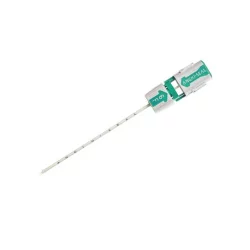
Angio-Seal™ VIP Cruciate Vein Closure Device for closure and reduction of time to haemostasis at the site of common femoral artery puncture in patients undergoing diagnostic angiography or interventional procedures
Untitled design (1)

RADIFOCUS wire

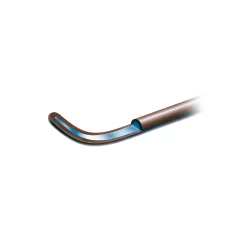
TERUMO hydrophilic guidewire, coated with polyurethane, a hydrophilic polymer coating, for guiding the catheter to the desired location in the vascular system during procedures
Untitled design (2)

RADIFOCUS catheter

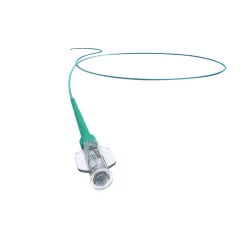
Angiographic or diagnostic TERUMO catheter for angiographic procedures, used with a guidewire: delivers radioactive media and materials to selected sites in the vascular system

Untitled design

PROGREAT

TERUMO microcatheter with integrated wire for therapeutic embolization and angiography in peripheral blood vessels. Ease of use, bend resistance, distal flexibility