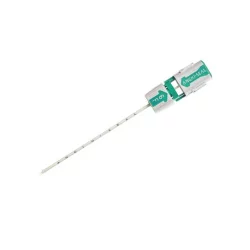
Benign prostatic hyperplasia (BPH) is a common age-related condition in which the prostate gland enlarges and begins to press on the urethra. It is not a cancerous disease, but it can cause troublesome urination problems and negatively affect quality of life.

Heading (7)

BPH most often develops in men between the ages of 40 and 50, and the risk increases with age:

    In the
  • 40–50 age group, BPH is detected in ~30–40% of men
  • . Over 60 years old, more than 50% of men suffer from
  • it. Over
  • 80 years old, up to 90% of men
  • are affected.

Symptoms

BPH can cause troublesome lower urinary tract symptoms, which include:

Difficulty urinating:

  • Weak or intermittent urine flow
  • Prolonged urination
  • Needs to tense the abdominal muscles to start urinating

Frequent urination:

  • Frequent urge to urinate even when the bladder is not full
  • Nocturia – can disrupt sleep

Feeling of incomplete emptying:

  • The sensation that the bladder has not completely emptied
  • After urination, a few drops of urine still flow If

BPH is left untreated, more serious complications may develop, such as urinary retention, urinary tract infections, and kidney damage.

Treatment

Treatment depends on the severity of symptoms and the patient’s health condition. In mild cases of benign prostatic hyperplasia, it is enough to change lifestyle habits (reduce fluid intake before bedtime, limit caffeine and alcohol), and take medication.

When lifestyle changes and/or medications are insufficient to relieve BPH symptoms and the condition is severe, surgery may be required. An effective and minimally invasive alternative to surgical operation is prostate artery embolization.

Prostate artery embolization is a minimally invasive procedure in which microscopic particles—microspheres—are injected into the prostate arteries, blocking blood supply to the prostate tissues. As a result, the prostate gradually shrinks and symptoms weaken. PAH is performed through the inguinal or arm artery; the procedure does not require general anesthesia or a long postoperative period. Before the procedure, patients undergo multiparametric magnetic resonance imaging and contrast computed tomography to assess the patency of the prostate arteries and possible contraindications, and sometimes urodynamic testing to confirm bladder outlet obstruction.

Procedure process

1. Anesthesia and preparation for the procedure. Embolization of the prostate arteries is performed on an outpatient basis using local anesthesia combined with intravenous sedation. Protection is used to reduce patient radiation exposure.

2. Embolization. Through a small incision in the groin or wrist, a catheter is inserted into the artery, through which special wires and radiocontrast agents are used to navigate to reach the dilated prostate arteries, inserting spirals/microspheres. To enhance the effect of the procedure, the arteries are simultaneously sclerosed with a special sclerotherapy agent.

3. Postoperative care. After the procedure, the catheter is removed, patients lie in a ward for several hours, and the same day they are discharged home or stay overnight for observation. It is recommended to avoid sports for 3 days, avoid heavy lifting for 5–7 days, and abstain from sexual intercourse for 10 days. Typically, patients need several days at home to fully recover before returning to work or normal activities. It is common for patients to experience mild pelvic pain during and after the procedure, which usually subsides within 1–3 days.

Prostatos arterijų embolizacija

Results

Prostate artery embolization is a safe alternative to surgical treatment for benign prostatic hyperplasia. After PAH, the prostate begins to shrink within the first 3 months. Symptoms usually improve within weeks or months after the procedure.

During embolization procedures, patients avoid the risk of retrograde ejaculation, erectile dysfunction, and sphincter damage associated with surgical treatment. Non-surgical treatment reduces the risk of negatively affecting sexual function.

Studies show that surgical treatment and embolization yield similar results, but embolization is characterized by a low risk of complications and faster patient recovery compared to surgery [1, 2, 3, 4, 5, 6].

Advantages of prostate artery embolization:

  • Lower risk of complications. No open surgical intervention, avoidance of infections and bleeding, generally unnecessary urinary catheter.
  • Faster recovery. Most patients return to normal activities within 1-2 days.
  • Less pain. The procedure is performed under local anesthesia, thus reducing discomfort.
  • Lower risk of negatively affecting sexual function compared to surgical treatment.

Sources

1. National Institute for Health and Care Excellence (NICE). Prostate artery embolisation for lower urinary tract symptoms caused by benign prostatic hyperplasia: interventional procedures guidance. 2018. https://www.niceorg.uk/guidance/ipg611/resources/ prostate-artery-embolisation-forlower-urinary-tract-symptoms-caused-by-benign-prostatichyperplasia-pdf-1899873917137861

2. Picel AC et al. Prostatic artery embolization for benign prostatic hyperplasia: patient evaluation, anatomy, and technique for successful treatment. Radiographics. 2019; 39(5):1526-48.

3. Young S, Golzarian J. Prostate artery embolization: state of the evidence and societal guidelines. Tech Vasc Interview Radiol. 2020; 23(3):100695.

4. Young S, Golzarian J. Prostate embolization: patient selection, clinical management and results. CVIR Endovasc. 2019; 2(1):7

5. Ray AF et al. Efficacy and safety of prostate artery embolization for benign prostatic hyperplasia: an observational study and propensity-matched comparison with transurethral resection of the prostate (the UK-ROPE study). BJU int. 2018; 122(2):270-82

6. Vigneswaran G et al. Prostatic artery embolization (PAE) and transurethral resection of the prostate (TURP) have a differential impact on lower urinary tract symptoms (LUTS): retrospective analysis of the multicentre UKROPE (UK Register of Prostate Embolization) study. Cardiovasc Intervent Radiol. 2021; 44(7):1095-102

7. Abt D et al. Comparison of prostatic artery embolisation (PAE) versus transurethral resection of the prostate (TURP) for benign prostatic hyperplasia: randomised, open label, non-inferiority trial. BMJ. 2018; 361:k2338

8. Carnevale FC et al. Advanced image guidance for prostatic artery embolization – a multicenter technical note. CVIR Endovasc. 2021; 4(1):63.

9. McWilliams JP et al. Society of Interventional Radiology multisociety consensus position statement on prostatic artery embolization for treatment of lower urinary tract symptoms attributed to benign prostatic hyperplasia: from the Society of Interventional Radiology, the Cardiovascular and Interventional Radiological Society of Europe, Société Française de Radiologie, and the British Society of Interventional Radiology. J Vasc Interv Radiol. 2019; 30(5):627-37.e1.

10. LaRussa S et al. Symptomatic improvement of lower urinary tract symptoms of benign prostatic hyperplasia: a comparative systematic review and meta-analysis of 4 different minimally invasive therapies. J Vasc Interv Radiol. 2021; 32(9):1328- 40.e11.

Products

Untitled design (1)

ANGIO SEAL VIP

Angio-Seal™ VIP Cruciate Vein Closure Device for closure and reduction of time to haemostasis at the site of common femoral artery puncture in patients undergoing diagnostic angiography or interventional procedures
Untitled design (1)

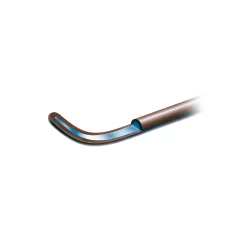
RADIFOCUS wire

TERUMO hydrophilic guidewire, coated with polyurethane, a hydrophilic polymer coating, for guiding the catheter to the desired location in the vascular system during procedures
Untitled design (2)

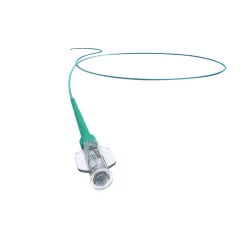
RADIFOCUS catheter

Angiographic or diagnostic TERUMO catheter for angiographic procedures, used with a guidewire: delivers radioactive media and materials to selected sites in the vascular system

Untitled design

PROGREAT

TERUMO microcatheter with integrated wire for therapeutic embolization and angiography in peripheral blood vessels. Ease of use, bend resistance, distal flexibility